
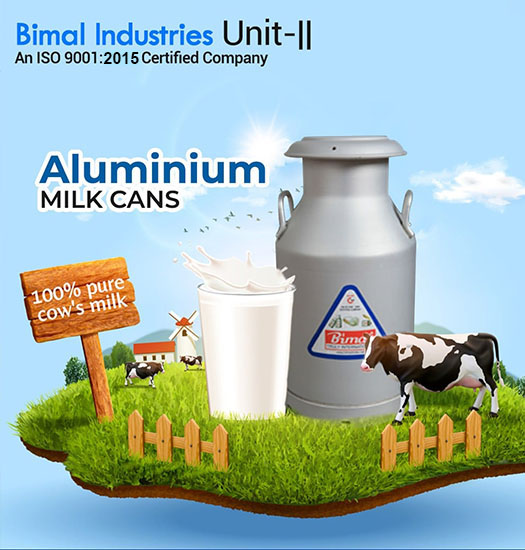
Milk cans are vital to storing and transporting milk from one location to another. Preservation of milk is the ultimate focus of the milk businesses. From the material of the storage container to the surrounding conditions, every factor is considered. Milk cans, especially aluminium milk cans, are the most popular choice of container due to their material qualities. Different seasons have unique conditions and bring their own set of challenges. It is a common misconception that milk doesn’t spoil during winter. While a small amount of it kept in our homes may last long without being kept in a refrigerator, there are other challenges that are faced at large storage levels. Hence, knowing the right strategies can help handle milk during extreme seasons. At Bimal Aluminiums Private Limited, we support the daily industry with our aluminium milk cans. Having expertise in this domain, we are sharing the key tips for the seasonal care of milk cans.
How To Handle During Summers
Follow Hygiene Standards: There are many ways bacteria can spoil or alter the state of milk during summer. The accumulated bacteria on milk cans, high surrounding temperature, and contamination are a few of the common reasons. While others can be taken care of by choosing reliable milk cans, contamination should be avoided by following the hygiene standards.
Protect From Sunlight: Exposure to sunlight creates an ideal environment for the bacteria to develop in the milk. It has the right amount of heat and, therefore, must be avoided at any cost.
Rapid Cooling: After sourcing the milk from farmers, it should be put into a rapid cooling chamber to restrict bacterial growth. Below 4°C, the bacterial growth is inhibited.
How To Handle During Winters
Don’t Ignore Cooling: While it is true that the chances of milk spoiling in winter are less, it is not eliminated. Bacteria can still grow when the temperature is around 10°C, which is very common for Indian winters. Therefore, freeze the milk when the temperature is not near zero. The sanitation practices must be followed as well.
Protect From Freezing: Although frozen milk does not develop bacteria, its structure can be altered by crystal formation. The change in texture ruins the quality of milk too.
Thaw Carefully: When thawing, make sure it is done slowly to avoid sudden temperature shock.
Other Tips
Tight Sealing: The milk cans must be tightly sealed during transit and storage in either season to avoid contamination.
Monitor Smell: Smell is a great indicator of the quality of milk, so monitor it regularly to check if it has changed.
Clean Environment: The surrounding environment must be hygienic and dry. Milk must not be stored in a stinky and mouldy environment with dust flowing around.
Conclusion
The above-mentioned tips are sufficient in handling milk and the milk cans, as both are important in maintaining the quality and quantity. Freeze protection in winters and rapid cooling in summers are essential steps to follow. We at Bimal Aluminiums Private Limited provide milk cans in a wide range of capacities with reliable hardness and build features. Trust us to get quality assured aluminium milk cans with lockable features.